Kotor Walking Tour
The Start of Kotor Walking Tour: Main Gate and the Main Square
One site that draws tourists in is Kotor, a walled, seaside town in Montenegro. This UNESCO World Heritage Site is tucked away between the towering mountains and the gorgeous Bay of Kotor. It offers a remarkable combination of outstanding natural beauty, ancient history, and magnificent architecture. The Kotor walking tour is something you won’t want to miss, whether you’re interested in history or culture or just want to explore Montenegro’s most storied town.
In this article, we will explore some of the best and most interesting things to do and places to visit in Kotor.
Kotor, Montenegro: A Brief Introduction
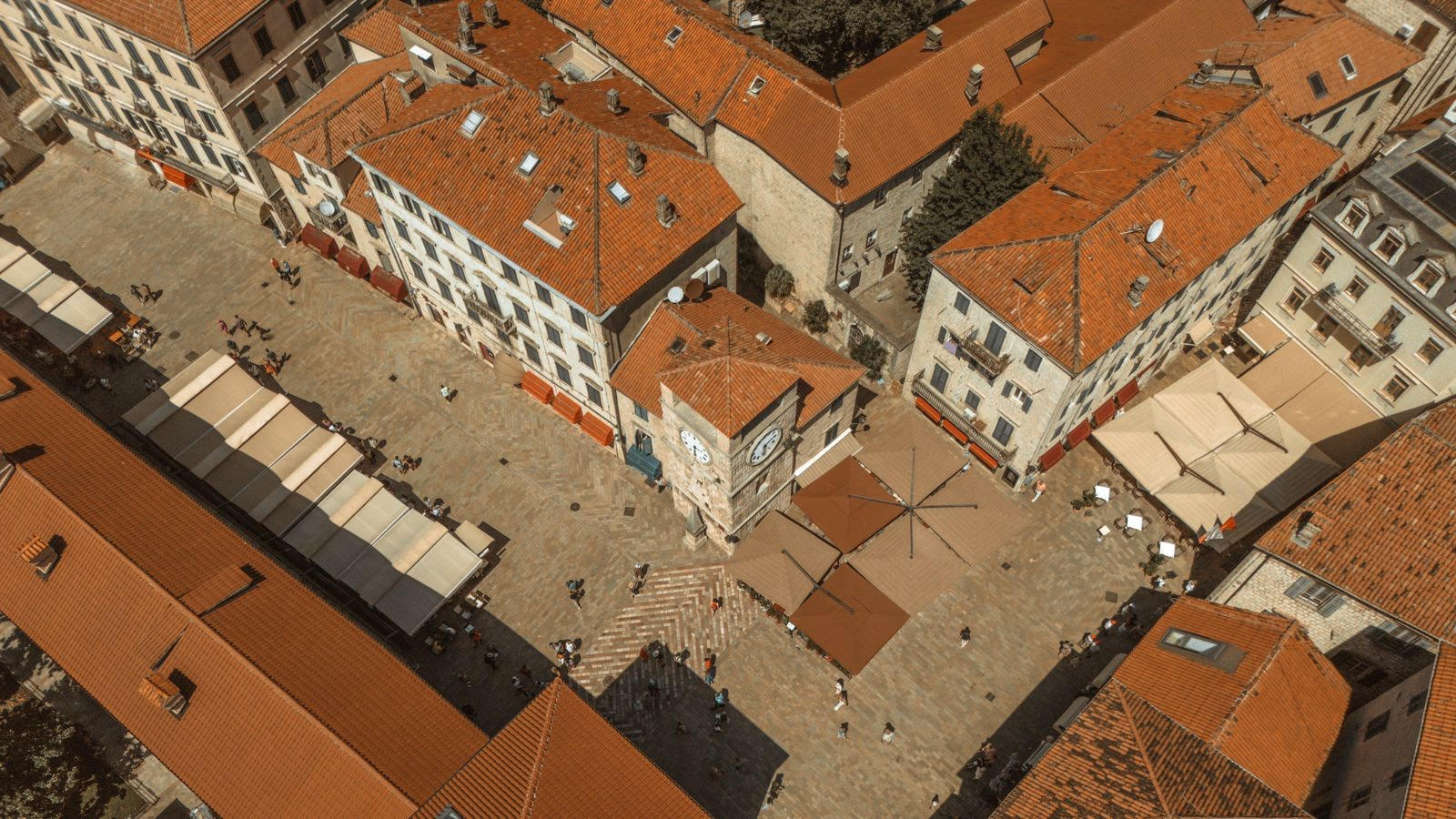
Kotor’s history dates back over 2000 years. This UNESCO World Heritage site is renowned for its well-preserved medieval architecture, winding cobblestone streets, and rich cultural heritage. As you explore Kotor, you’ll discover a blend of Venetian, Ottoman, and Austro-Hungarian influences that have shaped its unique character over the centuries. From the impressive city walls and ancient fortresses to the bustling squares and vibrant festivals, Kotor offers a captivating journey through history and tradition. And, doing a Kotor walking tour can only add more to an overall experience.
Kotor Walking Tour: Getting Started and Planning
As with anything in life, some planning goes a long way. Here, I’ll give you some tips on how to get started in order to have the most out of your day in Kotor.
And, if you don’t feel like exploring the Old Town alone, join others or book a private walking tour!
Kotor Walking Tour: Useful Tips

Before joining the Kotor walking tour, planning your route and understanding the key highlights you want to explore is essential. Kotor is a small town, and its old town area is easily walkable. Here are some tips to get you started:
Best Time to Visit Kotor
The ideal time to visit Kotor is spring (April to June) or fall (September to October) when the weather is pleasant and the town is less crowded. In any case, Kotor is worth visiting regardless of the time of the year, and its charming, narrow alleyways are always ready to be explored.
What to Wear
Comfortable walking shoes are a must. Also, consider bringing a hat, sunscreen, and a bottle of water, especially if you visit during the warmer months.
Kotor Maps and Guides
Ask for a Kotor city map at the tourist info kiosk, located just outside the main gate, or get one by joining the city tour. Either way, it’s free!
What to Expect on Your Kotor Walking Tour?
A lot of history, culture, heritage, and timeless beauty of Montenegro’s most storied town! Paired with visiting the city’s most important landmarks (Maritime Museum, St. Tryphon Cathedral, and others), you will leave with lasting memories. Pro Tip: Don’t shy away from waving your camera around. Kotor is most photogenic, and you can only add to its beauty.
The Start of Your Kotor Walking Tour
The Old Town of Kotor, surrounded by well-preserved medieval walls, is a maze of narrow streets, charming squares, and historic buildings. As you wander through the old town, be sure to visit these key attractions:
The Sea Gate – Kotor’s Main Gate (Sea Gate)
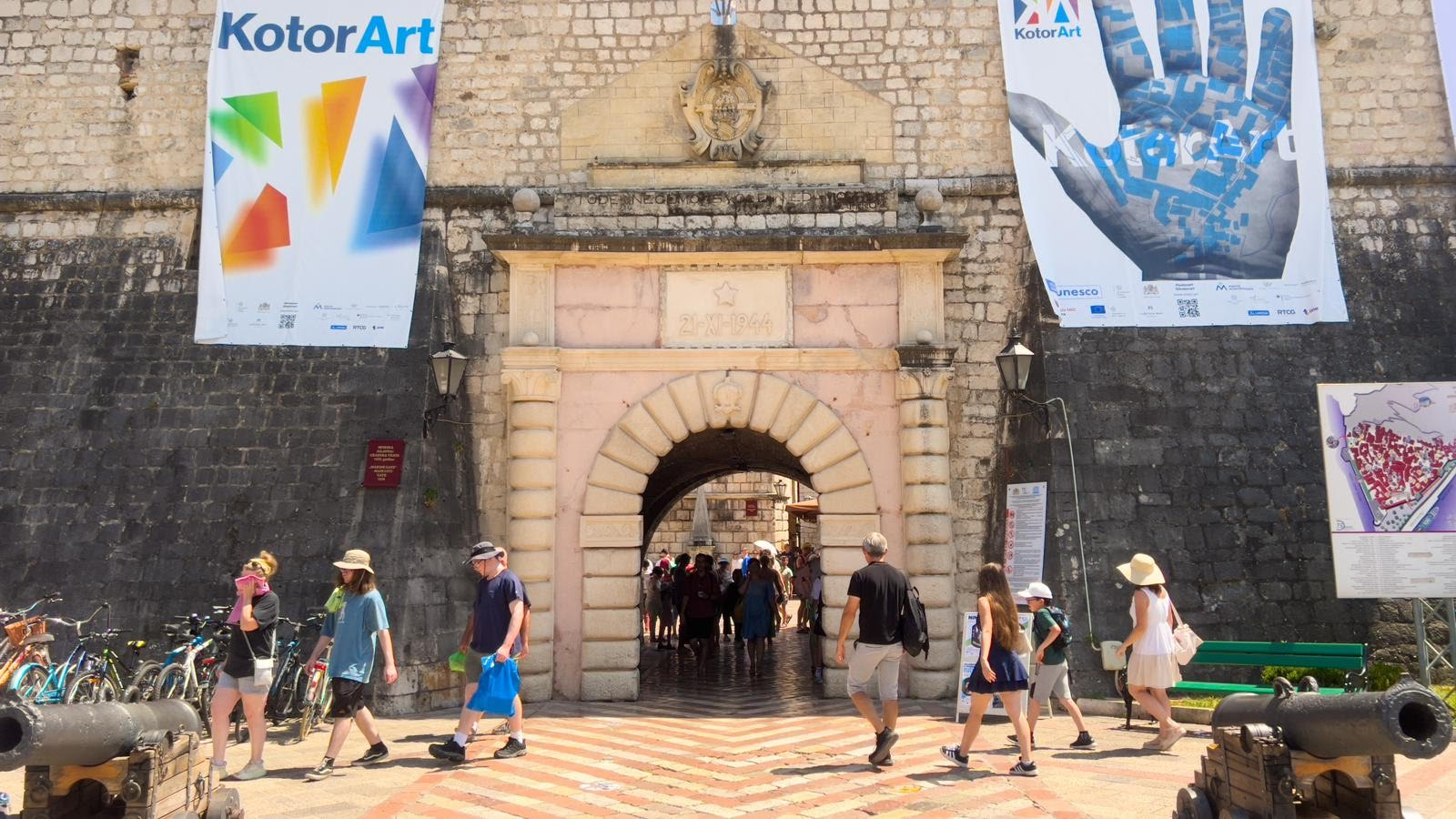
The Sea Gate is the main entrance to Kotor’s old town. It was built in 1555, under Venetian rule. This impressive gate is a grand introduction to the historical heart of Kotor. Look out for the plaque commemorating Tito’s liberation of Kotor in 1944 as well as the outline of the Austrian Griffons, once supporting their coat of arms.
Inside of Kotor’s Main Gate
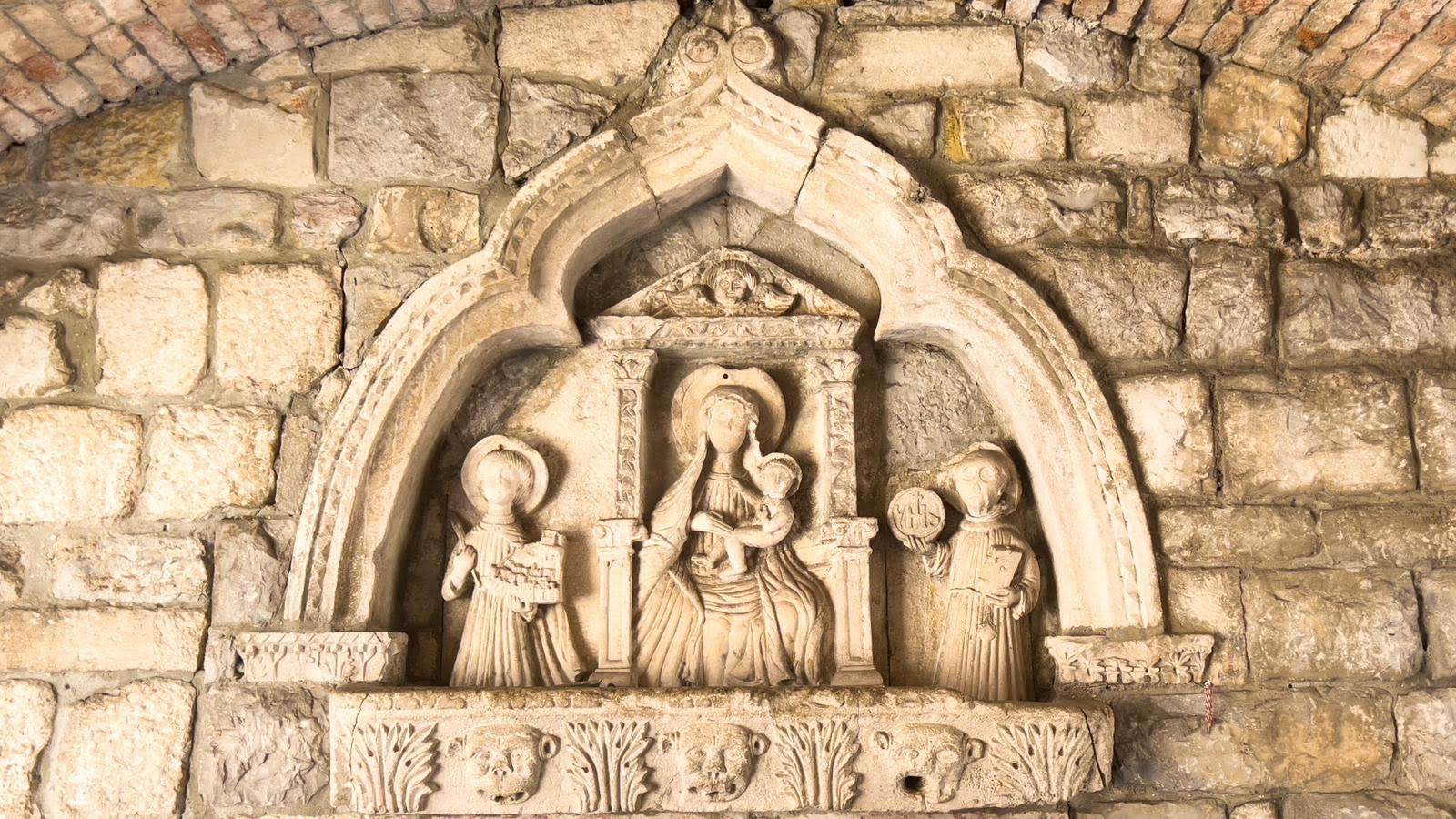
The inner part of the gate is, to many, more exciting and valuable, both artistically and historically. It contains a fantastic Gothic-style relief that is older than the gate itself – it was created in the 15th century.
On it (the relief): St. Tryphon (patron saint of Kotor) holding Kotor in his hand, the Virgin Mary with Jesus, St. Bernard.
There is a visible opening below the relief – a place where people could put in letters for local friars. True social media of the medieval Ages.
Kotor’s Main Square: The Square of Arms
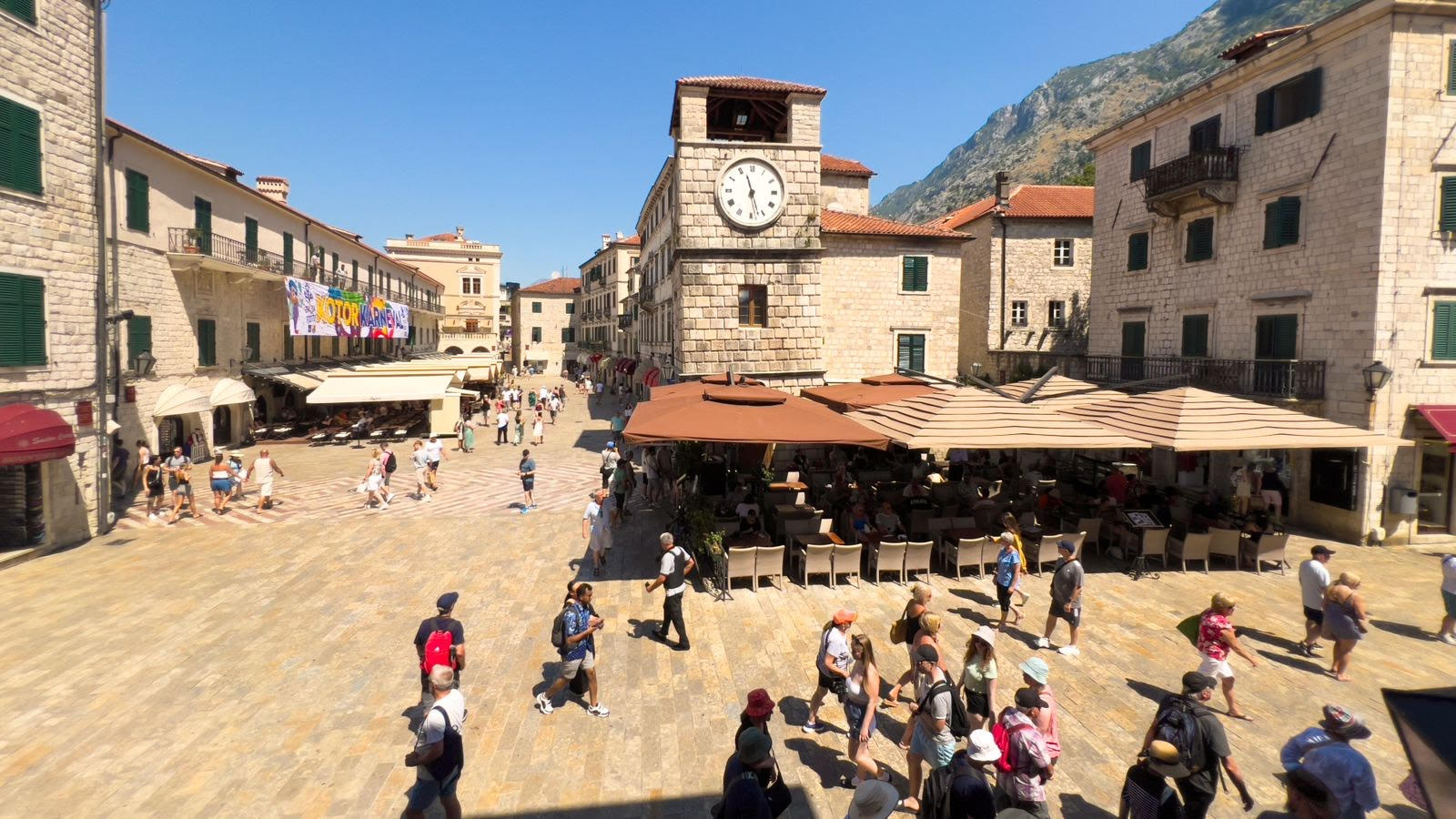
Apart from its Main Square, Kotor seems like it wasn’t really planned. Everything winds, twists and turns – and no house forms a straight, 90 degree, angle.
Main square is the largest square in Kotor. It was of most historical significance during Venetian times, housing some of the most important buildings of its time.
The Arsenal building
Used for weapon storage and repair, this building is the reason why the main square of Kotor is called the Square of Arms.
Kotor’s Clock Tower
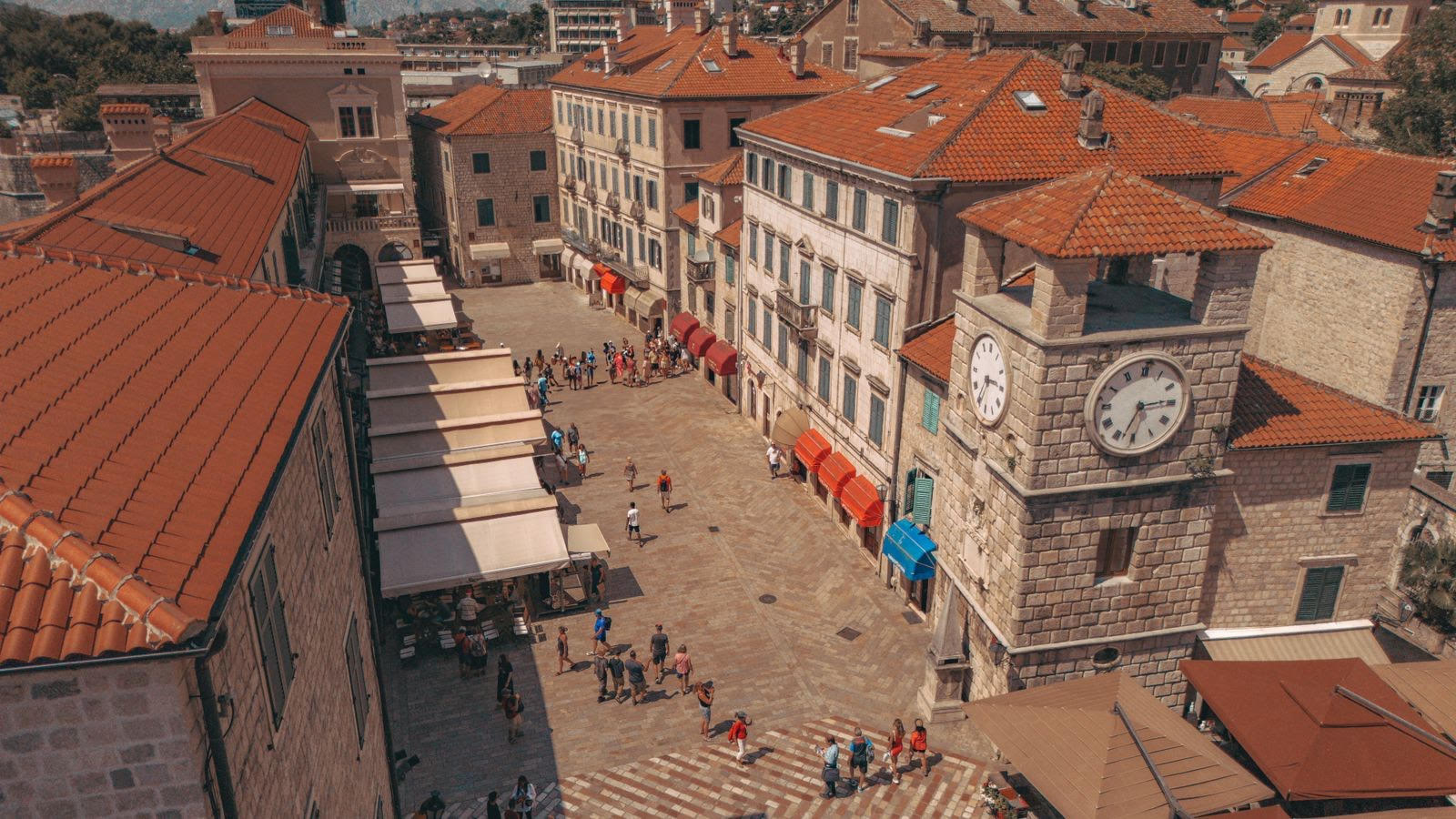
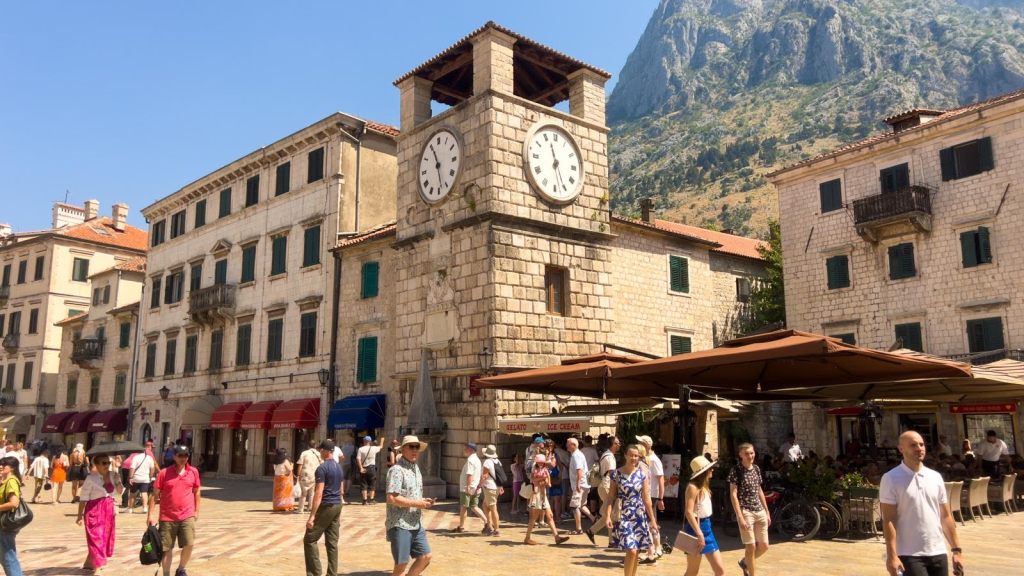
Built in 1602, tilted by earthquakes but reinforced to prevent further leaning, stands alongside a medieval pillory – which is often times overlooked by visitors. Make sure to book your Kotor walking tour so you get more in depth info on each and every site.
The Governor’s Palace and City Guard Tower
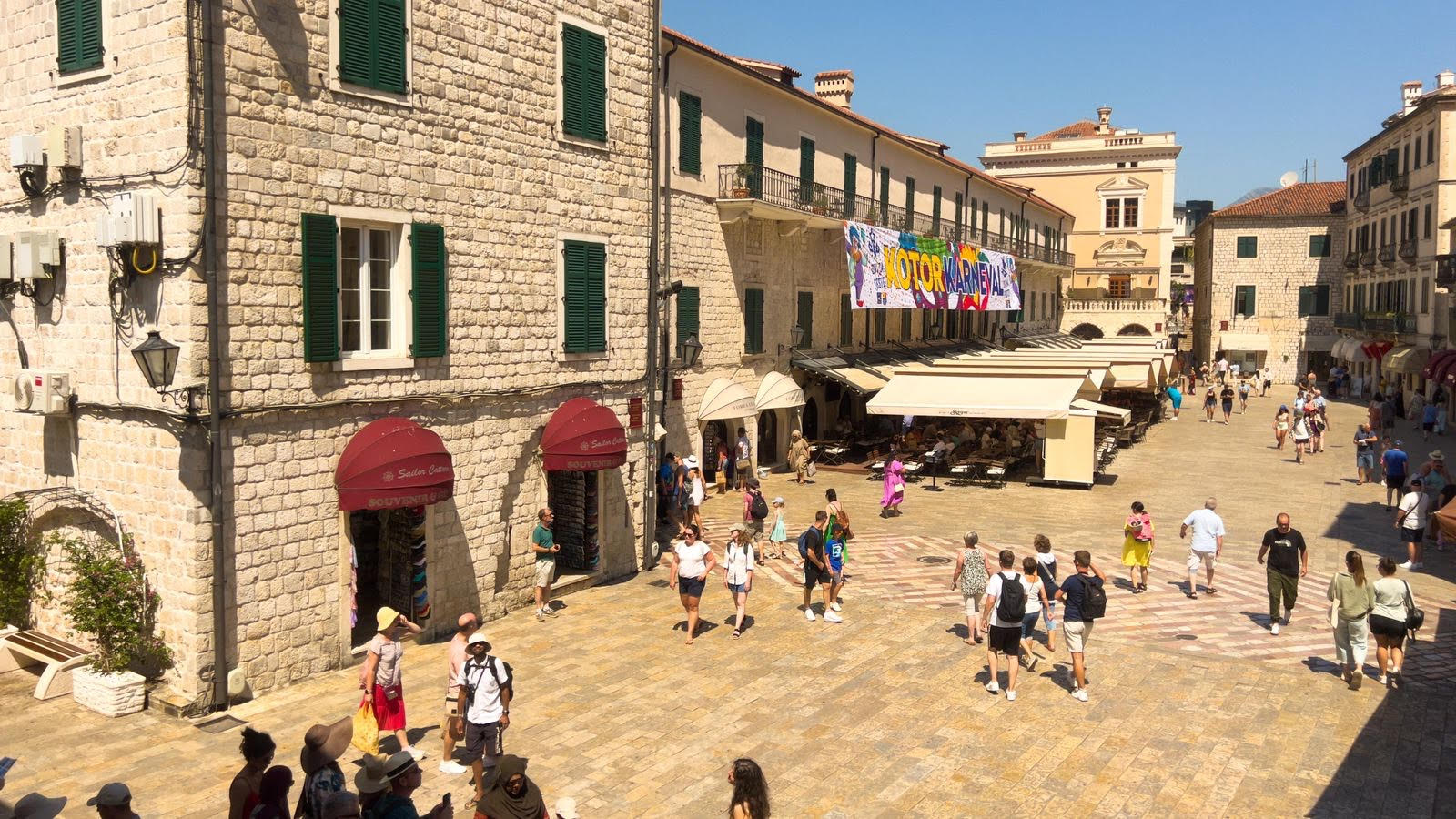
This 17th-century Venetian military seat takes up almost the entirety of town’s western facade. And with a 55m long balcony, it is pretty much in its original shape.
Along with the Governor’s Palace, these two form the western city facade. It’s sole purpose was, as its name suggests, to ‘guard the city’.
Napoleon’s Theater
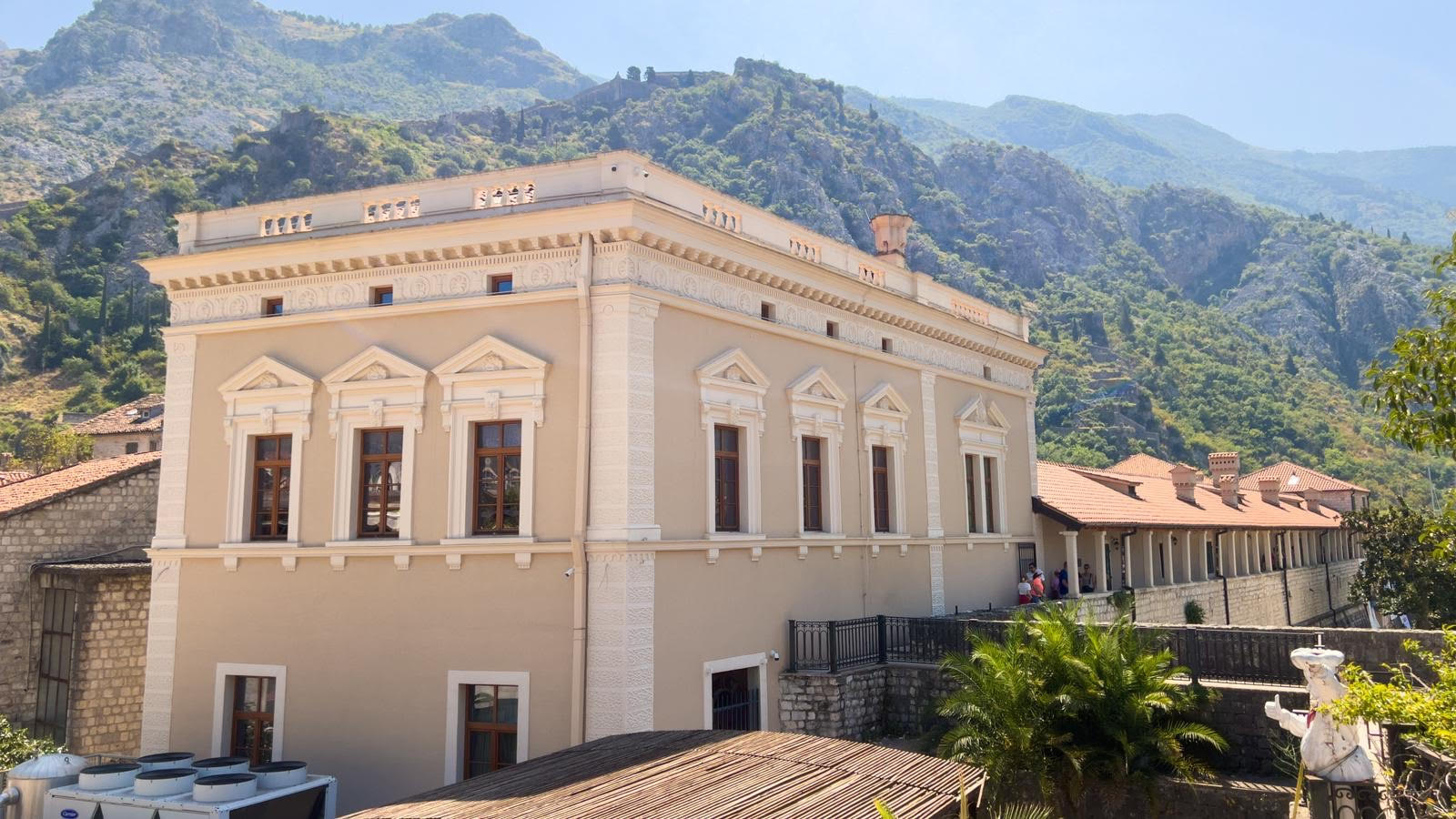
Repurposed multiple times since 1762, now serves as Hotel Cattaro, preserving its historical essence while functioning as a hospitality venue.
This, L shaped, square is a place where most of the big concerts and events in Kotor take place. And, given its rich history and traditions, there are more than a few of those.
Next Up: St. Tryphon’s Square, Maritime Museum, and more.
On the Way to the St. Tryphon Square
What would Kotor be, without its palazzos?
From the Bizanti family and their courtyard, showing those stories of old, to family Beskuća nearly fulfilling their wish to have 100 houses and change their last name, our alleyways lead further into town.
On the Flour Square, the most beautiful palazzo in Kotor – Pima Palace, alongside an amazing Buća-Pascali Palazzo, leading the way towards St. Tryphon’s Cathedral.
Thank you for reading this far. Book your Kotor Walking Tour in time and let’s wind the narrow streets of the Old Town, together.
See you in the Pt. 2
 Kotor Walking Tour
Leave a comment